Use terrain, tire construction, load and wheel design to set pressure—not an internet universal number.
THE BUYING DESK · RESEARCHED OCTOBER 9, 2026
Buy the gauge and the way back to road pressure
ARB’s digital deflator addresses controlled pressure reduction; VIAIR’s 400P addresses reinflation. They belong in the same purchase plan. Before selecting the deflator, check its specified measuring range against your vehicle: a display that reads low numbers is not necessarily accurate enough for low-pressure ATV tires.
Shortlist: 3 options, selected for meaningfully different fits, budgets or system approaches. Compare the exact variant and total installed cost.
Product links currently go directly to manufacturers or retailers; we do not earn commissions from these links. How recommendations work.
ARB E-Z Deflator Digital · ARB510A
A tire deflator with a digital pressure display for deliberate pressure adjustments.
Before ordering: Check its specified accuracy range against the pressures you use; very low-pressure ATV tires may need a different gauge.
Check current details ↗ARB E-Z Deflator analogue · ARB505
Best fit: Drivers who prefer a mechanical gauge
An analogue deflator alternative without a digital display or battery.
Before ordering: Check its useful range against the pressures and tire type you operate.
Check current details ↗VIAIR 400P portable compressor
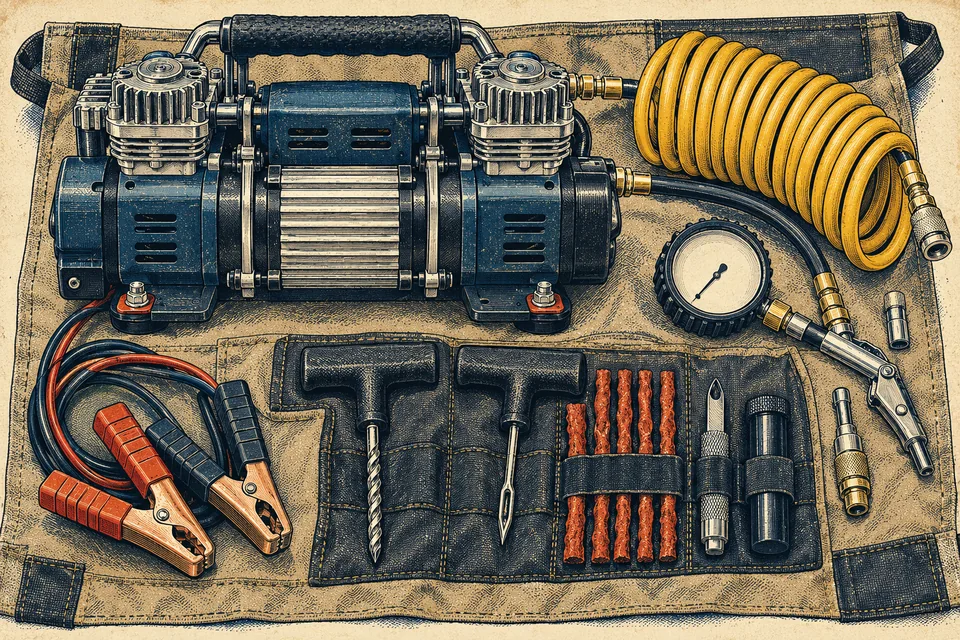
A portable compressor to evaluate for reinflating compatible vehicle tires after a trail outing.
Before ordering: Match tire size, inflation pressure, electrical connection and published duty cycle. Confirm the exact 400P variant rather than mixing its specifications with the Automatic or EF versions.
Check current details ↗How we would decide
Choose pressure equipment around the tires you run and the maker’s operating limits. Avoid a universal trail PSI recommendation. Restore the appropriate road pressure before highway use, and check the compressor’s power connection and repeated-tire duty requirements before relying on it away from services.
Editorial selections based on published product information, not hands-on testing. Follow the linked specifications for the exact variant and current availability.
Fit and purchase checklist
- Find the vehicle and tire maker’s guidance for off-road operation.
- Check load, tire sidewall construction and whether the wheels support low-pressure use.
- Carry a reliable gauge and a compressor capable of reinflating every tire.
- Avoid high-speed paved travel at off-road-low pressure.
- Inspect sidewalls and tread after sharp-rock and root sections.
- Respect trail-specific minimum pressures and rules in managed recreation areas.
The costly mistake
The correct sand pressure is not necessarily the correct rock pressure, and neither belongs on the freeway.
Save your model, measurements and seller questions