Tow hitches: receiver fit, electrical wiring and the weak link.
Choosing a hitch is not the same as making a vehicle tow-ready.
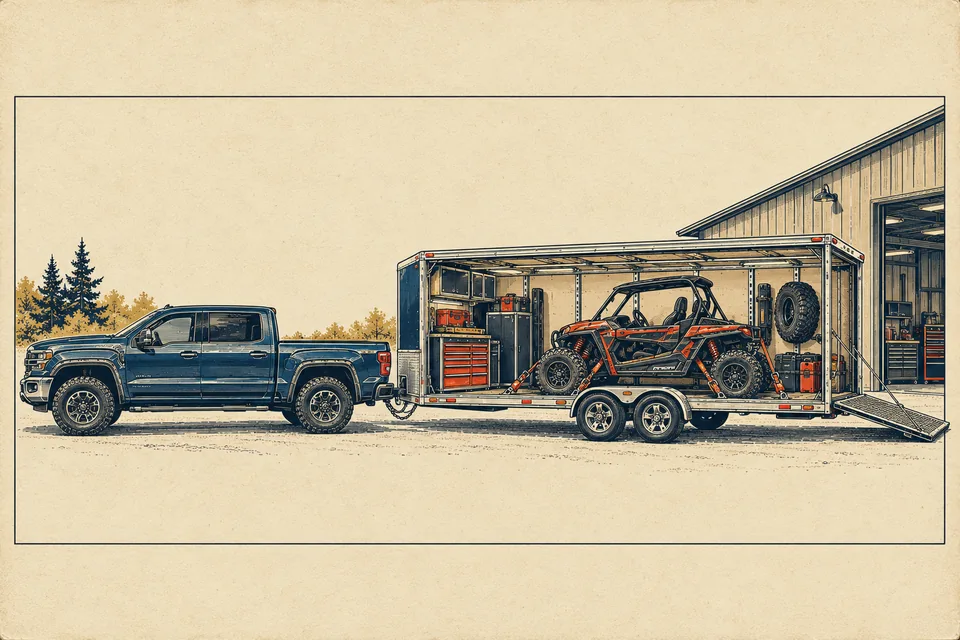
Magazine equipment plate · generic editorial illustration, not a product teardown or installation diagram.
Verify every linked capacity and connection before buying an install kit.
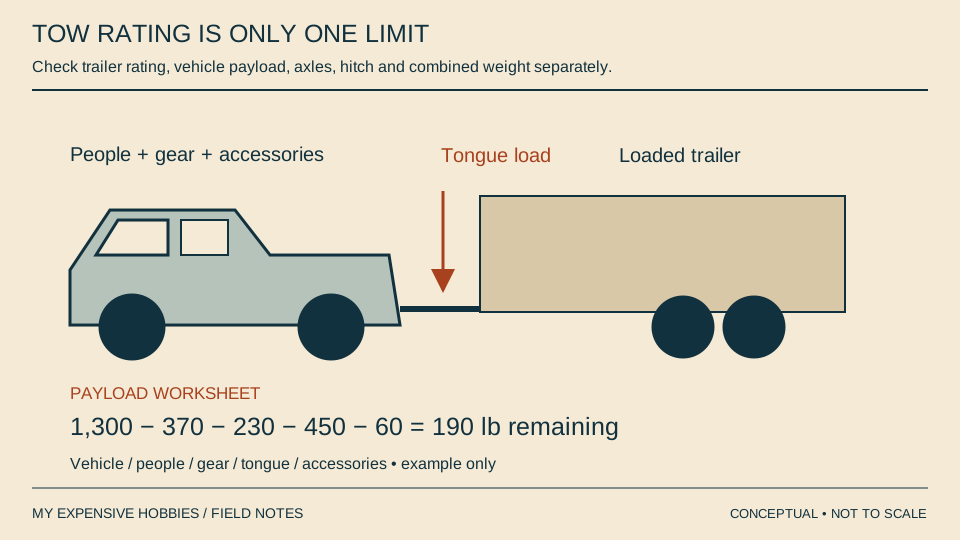
Slide the drawing sideways to read the full plate.Tow rating is only one limitExample payload: a 1,300 lb label minus 370 lb occupants, 230 lb cargo, 450 lb tongue load and 60 lb accessories leaves 190 lb. Tongue load counts against vehicle payload. This worksheet does not verify axle or combined ratings.Reference: Ford — towing dictionary
THE BUYING DESK · RESEARCHED OCTOBER 9, 2026
P3 versus Echo: two ways to control trailer brakes
The receiver, wiring and brake controller are separate parts of a towing installation. For compatible electric trailer brakes, the P3 gives you dedicated in-cab controls; Echo offers a portable 7-way connection with a phone interface. First establish whether a compatible factory controller is already installed.
Shortlist: 3 options, selected for meaningfully different fits, budgets or system approaches. Compare the exact variant and total installed cost.
Product links currently go directly to manufacturers or retailers; we do not earn commissions from these links. How recommendations work.
Tekonsha P3 90195
An in-cab proportional trailer brake controller with a dedicated display and controls.
Before ordering: The vehicle harness, mounting position, trailer brake type and setup still have to match. A controller cannot raise a tow rating.
Prefer the P3 when a permanent in-cab installation and physical controls suit the vehicle. Consider Echo when portability matters and its power, connector and control requirements work for the combination. Order the receiver and wiring by exact year, model and configuration, not by receiver opening alone.
Editorial selections based on published product information, not hands-on testing. Follow the linked specifications for the exact variant and current availability.
Fit and purchase checklist
Confirm the exact model year, trim and drivetrain on the manufacturer fit guide.
Compare receiver rating with the vehicle’s lower towing and tongue-weight limits.
Check whether brakes or lighting adapters are legally required for the planned trailer.
Route wiring according to vehicle-specific instructions, keeping it away from exhaust and moving suspension.
Verify ground, corrosion protection and connector retention.
Test trailer lights and brake controller operation before the first highway trip.
The costly mistake
A Class III sticker can describe the receiver while the vehicle itself remains unsuitable for the trailer.
Save your model, measurements and seller questions
YOUR OWN MEASUREMENTS · STORED ONLY ON THIS DEVICE