Sonar, lights, a fish finder and a heater fan have different duty cycles. Amp-hours alone are not a runtime guarantee.
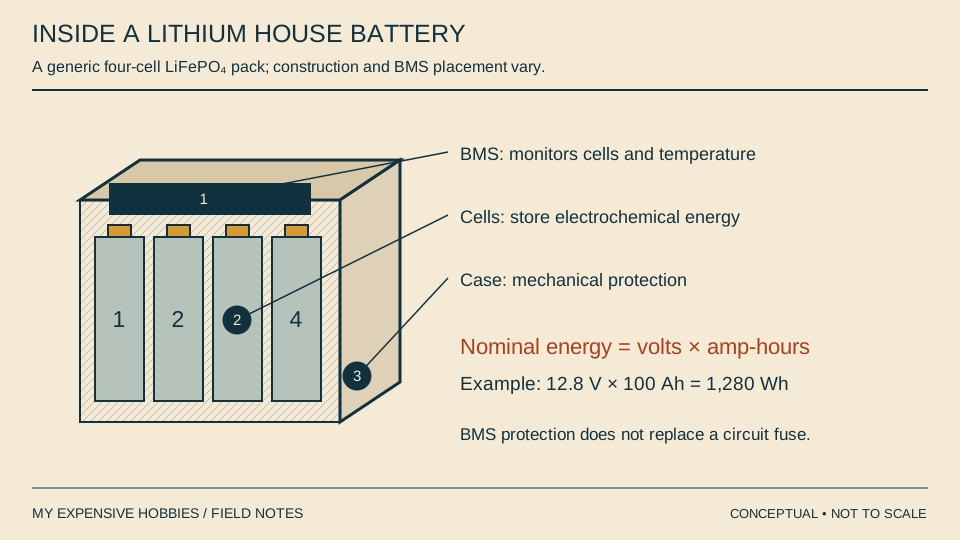
Magazine equipment plate · generic editorial illustration, not a product teardown or installation diagram.
Build an energy budget in watt-hours and check the manufacturer’s allowed charging temperature.
Slide the drawing sideways to read the full plate.Inside a lithium house batteryConceptual cutaway identifying cells, case and battery management. A nominal 12.8 V, 100 Ah example stores 1,280 Wh before usable-capacity and efficiency allowances. This is not a product teardown.Reference: Dakota Lithium — internal BMS and battery use
THE BUYING DESK · RESEARCHED OCTOBER 9, 2026
A 10Ah pack is a candidate, not an all-day promise
The Dakota 12V 10Ah pack is worth considering for a compact electronics setup. First total the load in watt-hours. As an illustration, 15 watts for six hours consumes 90 watt-hours before reserve or losses; a higher-draw sonar and several accessories can change the size decision quickly.
Shortlist: 3 options, selected for meaningfully different fits, budgets or system approaches. Compare the exact variant and total installed cost.
Product links currently go directly to manufacturers or retailers; we do not earn commissions from these links. How recommendations work.
Dakota Lithium 12V 10Ah battery
A compact LiFePO4 option to evaluate for modest fishing-electronics loads.
Before ordering: Match terminal type, load current, dimensions and charger. Follow the exact battery’s cold-weather charging limits.
Compare required energy against the exact battery’s nominal energy and allowed usable capacity, leaving a reserve for your conditions. Check the connector and charger before ordering. Bring the battery into its permitted charging temperature range rather than assuming cold-tolerant discharge permits cold charging.
Editorial selections based on published product information, not hands-on testing. Follow the linked specifications for the exact variant and current availability.
Fit and purchase checklist
List each load’s watt rating and hours used on an actual long day.
Multiply watts by hours for each load, then sum the watt-hours needed.
Divide by battery nominal volts and account for usable share to estimate starting amp-hours.
Check cold-temperature discharge and charging limits from the specific battery manufacturer.
If using an inverter, add conversion loss and idle power rather than treating AC as free.
Plan a charging routine that does not require charging a lithium battery below its specified minimum temperature.
The costly mistake
The cheapest battery is expensive when the hole is drilled, the sonar dies and your charger is stuck in the truck.
Save your model, measurements and seller questions
YOUR OWN MEASUREMENTS · STORED ONLY ON THIS DEVICE