Published maximum line pull is a specific performance rating, not a guarantee in mud or at every rope layer.
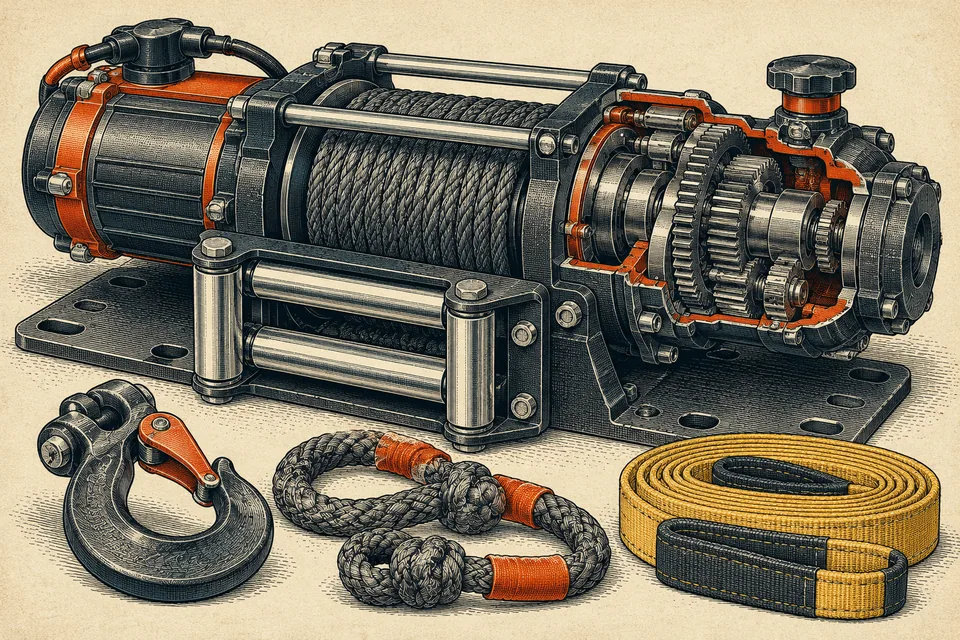
Magazine equipment plate · generic editorial illustration, not a product teardown or installation diagram.
Choose an approved mounting and recovery system around the loaded vehicle and likely resistance.
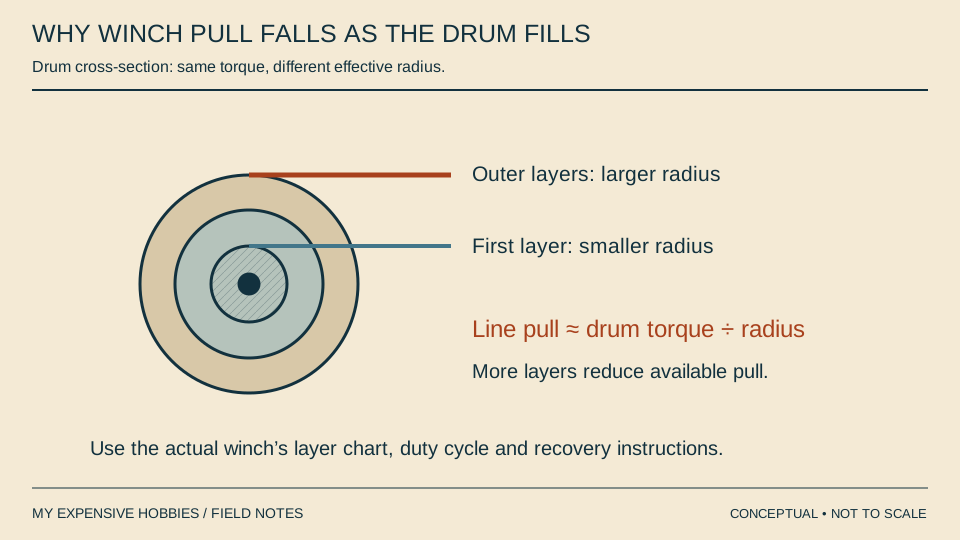
Slide the drawing sideways to read the full plate.Why winch pull falls as the drum fillsThe first rope layer has the smallest working radius and the highest rated pull. As layers accumulate, effective radius increases and available pull decreases. No recovery load, anchor strength or safe working limit is calculated.Reference: WARN — pulling capacity by layer
THE BUYING DESK · RESEARCHED OCTOBER 9, 2026
VRX 45: read beyond the 4,500-pound label
The WARN VRX 45 is a concrete powersports candidate, but the rating does not tell you whether a particular recovery is possible. Rope layers, mounting, electrical supply, direction of pull and the resistance of the stuck vehicle all matter. This version uses steel rope; the similarly named 45-S uses synthetic rope.
Shortlist: 3 options, selected for meaningfully different fits, budgets or system approaches. Compare the exact variant and total installed cost.
Product links currently go directly to manufacturers or retailers; we do not earn commissions from these links. How recommendations work.
WARN VRX 45 winch · 101045
A 4,500-pound-rated powersports winch supplied with steel rope.
Before ordering: This is the steel-rope VRX 45, not the synthetic-rope 45-S. Verify mounting, electrical supply, line-layer ratings and the vehicle application.
Start with the vehicle-specific mounting solution and WARN’s operating instructions. Choose the winch and complete recovery system together, with appropriate training. Do not assume a winch advertised above the vehicle’s curb weight makes every pull safe or can substitute for lifting equipment.
Editorial selections based on published product information, not hands-on testing. Follow the linked specifications for the exact variant and current availability.
Fit and purchase checklist
Record the loaded vehicle mass, not its empty curb weight.
Read the winch’s line-pull table at different drum layers and check duty-cycle constraints.
Verify the winch mount, bumper, recovery attachment and electrical supply are rated and compatible.
Use appropriately rated rope and hardware with a clear line-of-fire exclusion zone.
Plan how to recover safely without attaching to suspension or transport tie-down points.
Practice controlled recovery with instruction before getting buried axle-deep.
The costly mistake
A bold “12,000 lb” label does not mean every part of a recovery system is rated for that load.
Save your model, measurements and seller questions
YOUR OWN MEASUREMENTS · STORED ONLY ON THIS DEVICE