ENERGY TOOL · NO ACCOUNT REQUIRED
Battery runtime estimator.
Turn volts, amp-hours and real average watts into an estimated number of hours. See why standby loads matter.
INTERACTIVE CALCULATOR
Adjust the inputs. Estimates update instantly; nothing is uploaded.
YOUR ESTIMATE
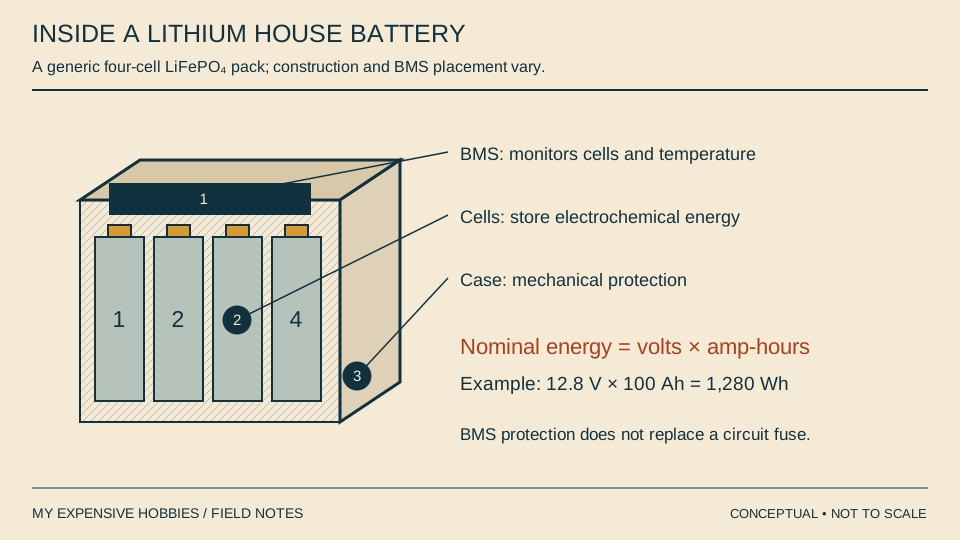
Nominal energy = volts × amp-hours. Estimated runtime = nominal watt-hours × usable share × efficiency ÷ average load. This excludes many losses and battery-specific limitations.
Do not use this to size essential or emergency loads. The load may vary wildly; BMS, inverter idle draw, current limits, temperature and age all affect results.
IF YOU WANT THE WHOLE STORY
The math is the beginning.
LiFePO₄ can be a wonderful upgrade. It can also expose every shortcut in an old charging system. Do the checks in this order.
Read the companion guidePUT THE RESULT TO WORK
Price a complete NG system, not a bare battery
Victron Lithium NG is a useful example of why the battery price is not the conversion price. It requires a compatible NG battery-management system. Engine charging may need a controlled DC-DC path, and a shunt monitor can make the energy budget visible. None of those components independently confirms that the boat is ready for lithium.
Read the buying guide →