Do not swap chemistry before checking alternator behavior, charging profiles, protection, temperature limits and actual electrical loads.
First: define what you want the bank to do
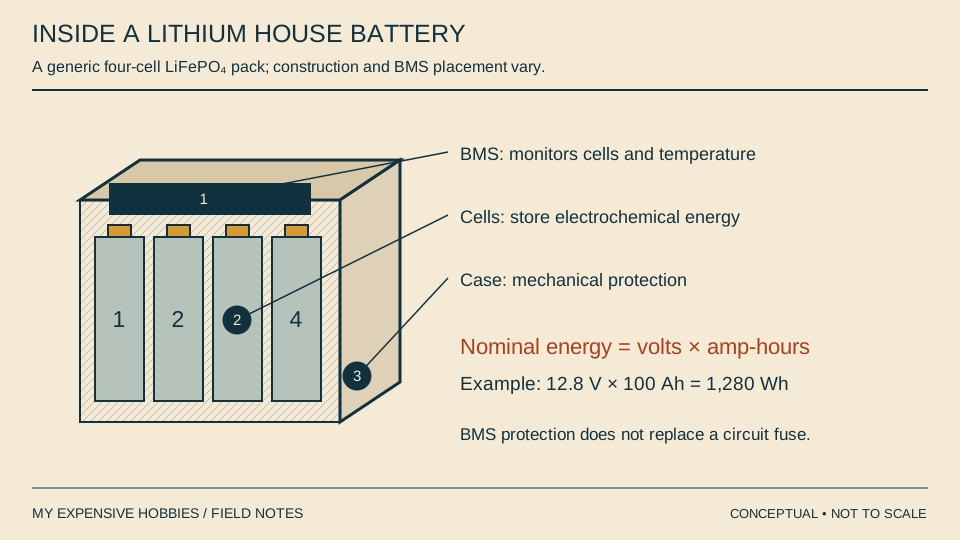
Write down your overnight loads: navigation equipment, refrigeration, pumps, lights, laptops, inverter standby draw and everything else that runs while the engine is off. A 100 Ah battery at 12.8 V has a nominal 1,280 Wh, but usable energy depends on chemistry, temperature, BMS limits and how deeply you discharge it.
If you have a separate engine-starting battery, keep that job distinct from the house bank. Some engine manufacturers specify battery types and cranking characteristics. A house-bank retrofit is not permission to improvise the starting circuit.
Second: audit every charging source
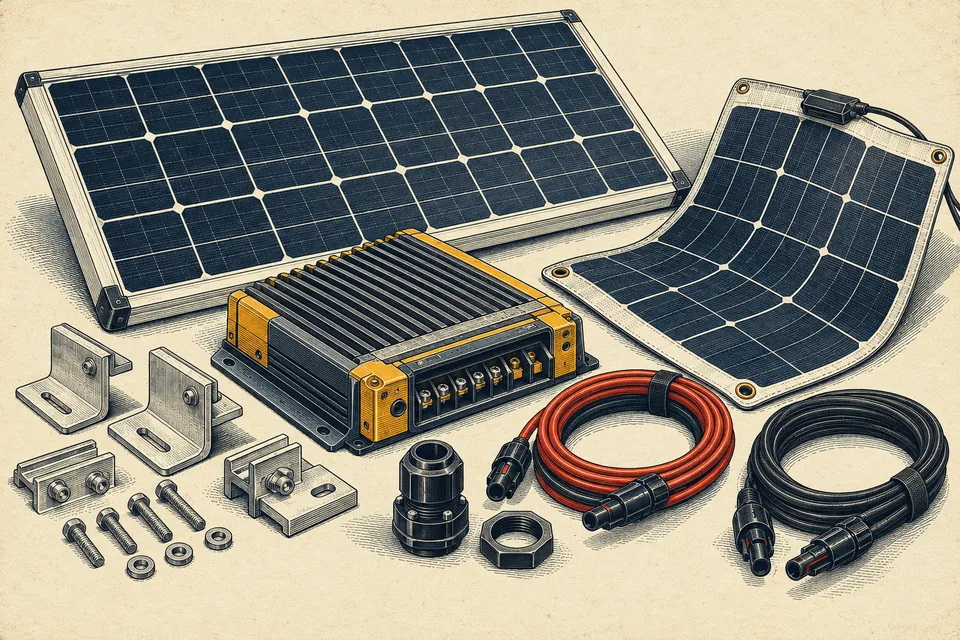
A lithium battery can accept charge differently from a lead-acid battery. That can demand more sustained output from an alternator, and some systems need a DC-DC charger or other current-limiting strategy. Inspect the engine alternator, shore charger, solar controller and any existing combiner or isolator.
Check each device for an explicitly supported LiFePO₄ charge profile. A charger that once worked perfectly on flooded batteries may not have suitable voltage settings or temperature compensation for lithium.
Third: get serious about the battery management system
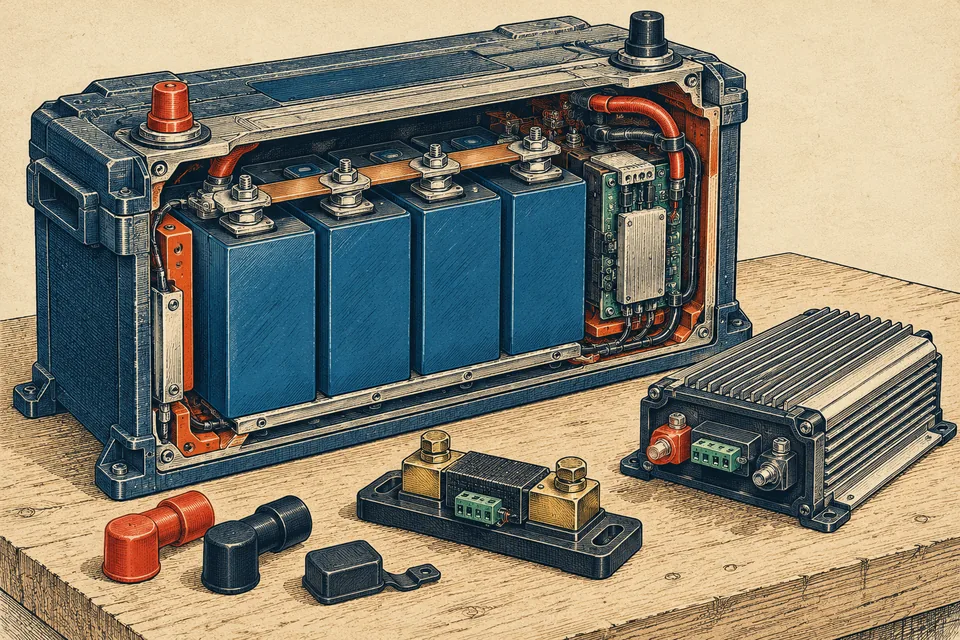
The battery management system is not a magic substitute for a complete electrical design. Understand low- and high-voltage limits, maximum continuous and peak discharge, charge-current limits, low-temperature charge cutoff and how shutdown affects your navigation, pump or engine-related loads.
A sudden BMS disconnect can create trouble in an improperly designed alternator system. The correct isolation, fusing and switching arrangement depends on the actual hardware.
Fourth: measure cable paths before ordering
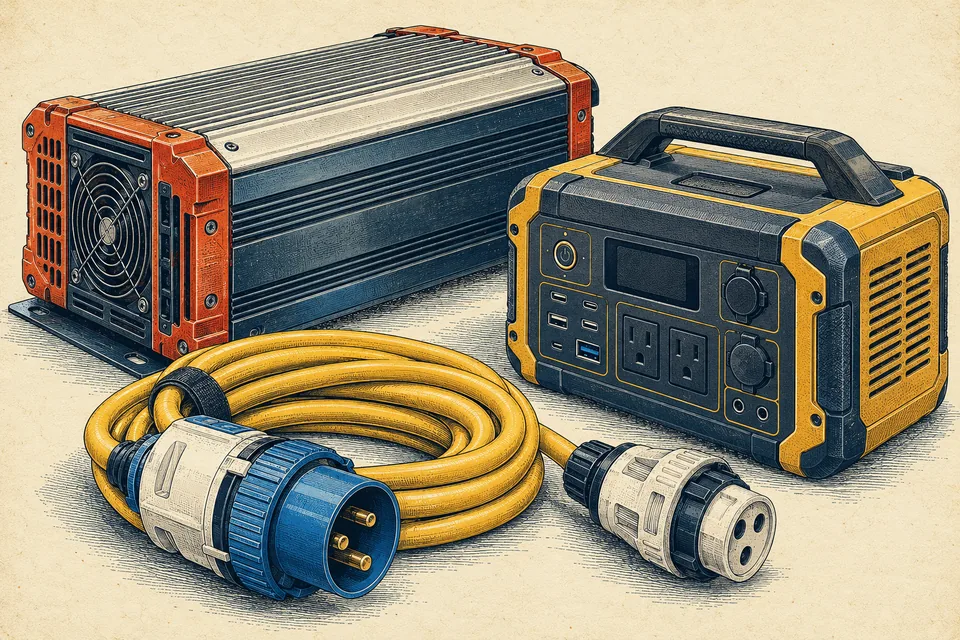
Battery relocation and higher current draw may demand different cable lengths, gauges, lug sizes and fuses. Voltage drop is only one criterion; ampacity, installation temperature, bundling, overcurrent protection and proper termination matter.
Use marine-rated components where required, label everything and document the circuit. For large inverter or charging circuits, have an appropriately qualified marine electrician verify the design.
Fifth: compare total system cost, not battery price
Price the battery, mount, monitor/shunt, charger changes, cable, disconnect, fuses, lugs and installation. Then compare the upgrade with what you actually need. A small boat used for afternoon fishing may not justify the same system as a cruising boat running refrigeration for days.
A measured energy budget makes this a solvable engineering problem. The blue plastic battery case alone does not.
FREE WORKSHEET
Battery runtime estimator
Turn volts, amp-hours and real average watts into an estimated number of hours. See why standby loads matter.
Take this list shopping
- Daily and overnight energy use calculated in watt-hours
- House vs engine-start battery requirements separated
- Alternator and all chargers checked for lithium support
- Battery BMS limits and low-temperature charging protections verified
- Cable size, fuses, switchgear and mount reviewed
Sources and further reading
Links are to original manufacturer documentation, authoritative boating references, or primary resources. Specific product choices still require checking current instructions.
Research published 2026-10-08. Independent educational guidance; not a certified marine engineering, electrical, mechanical or safety inspection.