THE SHORT VERSION

Scope is deployed rode length divided by vertical distance from seabed to bow roller or chock; add water depth and bow height first.
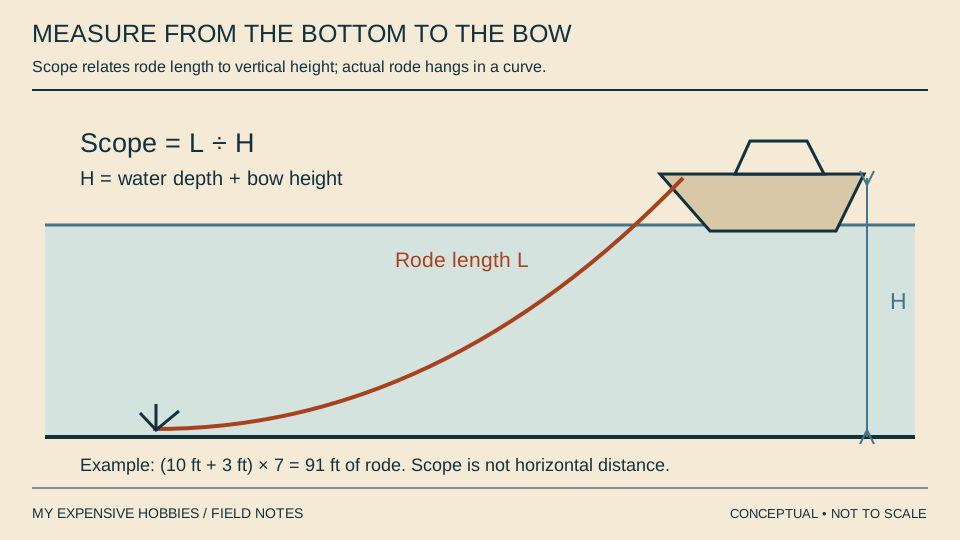
Scope equals deployed rode divided by water depth plus bow height, allowing for changing depth and tide. An illustrative 7:1 scope at 10 ft depth and 3 ft bow height needs 91 ft. This does not determine holding or swing clearance.
Slide the drawing sideways to read the full plate.
Measure from the bottom to the bowScope equals deployed rode divided by water depth plus bow height, allowing for changing depth and tide. An illustrative 7:1 scope at 10 ft depth and 3 ft bow height needs 91 ft. This does not determine holding or swing clearance.Reference: BoatUS Foundation — anchoring and mooring

THE BUYING DESK · RESEARCHED OCTOBER 9, 2026

FX-7: confirm the size before buying the rode

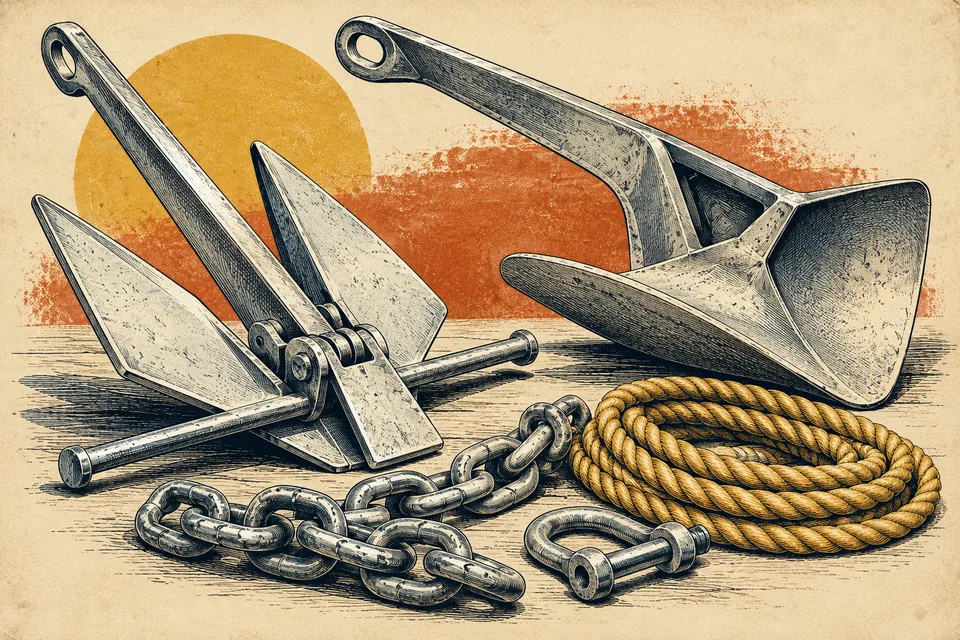
The Fortress FX-7 is one named fluke anchor to evaluate against the manufacturer’s sizing and seabed guidance. Its low mass is useful for handling, but anchor selection still depends on the vessel and conditions. The required rode length follows depth to the bow and scope, not the anchor’s model number.

Shortlist: 3 options, selected for meaningfully different fits, budgets or system approaches. Compare the exact variant and total installed cost.

Product links currently go directly to manufacturers or retailers; we do not earn commissions from these links. How recommendations work.

Fortress FX-7 anchor

A lightweight fluke-anchor model to consider where the manufacturer’s vessel and bottom-type guidance fits.

Before ordering: FX-7 is one size, not a default for every boat. Match anchor, chain, rope, connectors and stowage to your actual vessel and conditions.

Check current details ↗

Mantus M1 anchor

Best fit: Boaters whose bow can accommodate a roll-bar design

A roll-bar anchor family offered in numerous vessel-size choices.

Before ordering: Use the maker’s current sizing guide and confirm bow-roller, locker and seabed suitability.

Check current details ↗

Rocna Vulcan anchor

Best fit: Boats where a roll bar conflicts with bow hardware

A roll-bar-free anchor family intended to suit many bow arrangements.

Before ordering: Choose the exact size from current guidance and verify roller geometry before ordering.

Check current details ↗

How we would decide

Select the anchor for your vessel and expected holding ground, then match the chain, rope and connectors. Confirm retrieval and stowage before ordering. Use the scope calculator to examine geometry while accounting separately for tide, swing room and conditions; the example ratio is not a universal anchoring prescription.

Editorial selections based on published product information, not hands-on testing. Follow the linked specifications for the exact variant and current availability.

The deceptively simple formula

For a 5:1 scope in 10 feet of water with the bow roller 4 feet above the surface, you need about 70 feet of rode: (10 + 4) × 5. Using only water depth would underestimate the payout by 20 feet.

BoatUS Foundation describes 7:1 as a generally recommended scope and notes that shorter 5:1 may be considered in calmer conditions with suitable gear. Conditions and equipment matter; a number is never an anchoring guarantee.

Available swing room can be the limiting factor

More line means more room for the boat to swing around its anchor. Consider depth changes, shorelines, nearby boats and underwater hazards when selecting the spot. In crowded anchorages, simply paying out more line can create a new problem.

Anchor type and bottom composition—sand, mud, vegetation or rock—can influence how consistently the anchor sets.

Chain, chafe and hardware matter

Chain helps the angle of pull and resists abrasion at the bottom; it must be compatible with the windlass and rated connectors where applicable. Inspect shackles, swivels, thimbles and rope for damage.

A cut or corroded connection is not saved by owning a larger anchor.

Set the anchor; do not just drop it

Pay out appropriately, allow the anchor to engage and use a cautious backing procedure consistent with your vessel and conditions to test the set. Then monitor position and changes in weather or tide.

The calculator below is geometry only, not a substitute for anchoring judgment, charts, local regulations or a safe watch.

FREE WORKSHEET

Anchor scope calculator

Calculate anchor rode from water depth, bow height, and scope ratio. The bow is part of the triangle.

Open the tool

Take this list shopping

  • Water depth and bow-roller height measured
  • Scope chosen for conditions and rode type
  • Swing room and bottom checked
  • Hardware and rope inspected
  • Anchor set checked and position monitored

Sources and further reading

Links are to original manufacturer documentation, authoritative boating references, or primary resources. Specific product choices still require checking current instructions.

Research published 2026-10-08. Independent educational guidance; not a certified marine engineering, electrical, mechanical or safety inspection.