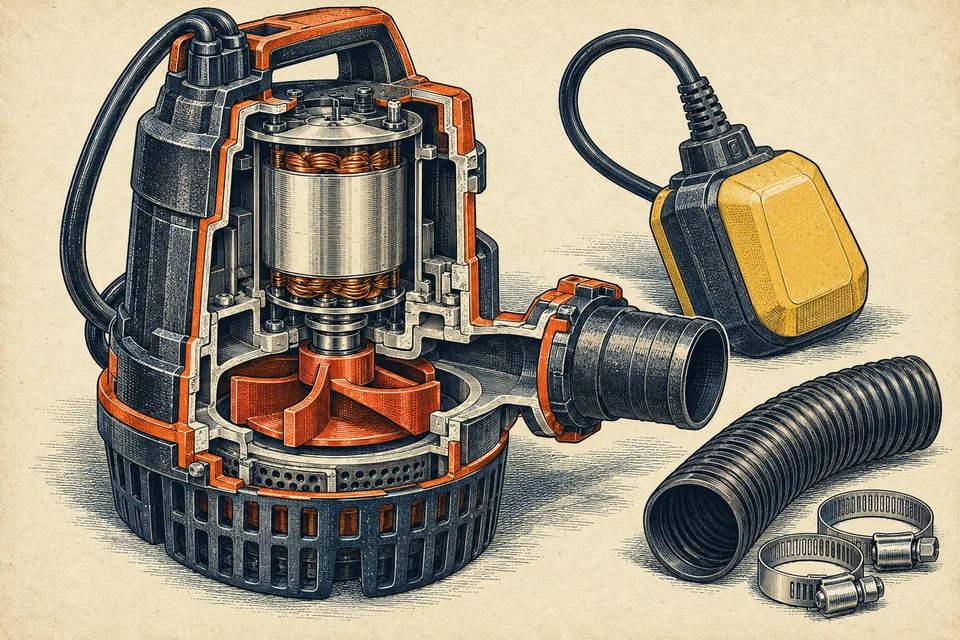
Use manufacturer flow-versus-head curves and actual hose routing; nominal GPH alone is not a reliable installed-capacity figure.
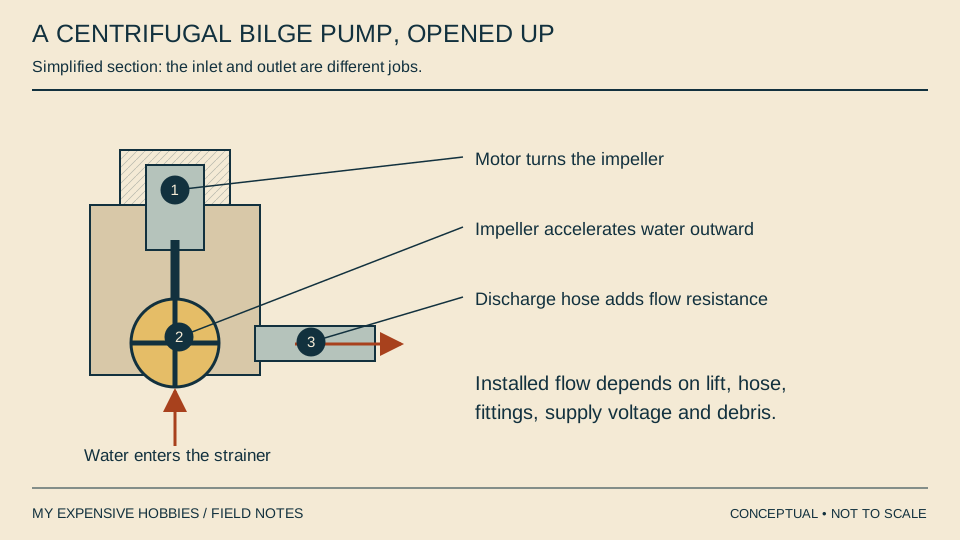
Advertised capacity is not installed capacity
BoatUS explains that many pump ratings are measured in favorable test conditions. Once the water must be lifted vertically and pushed through hose, elbows and discharge fittings, output can fall dramatically.
For small centrifugal pumps, even a couple feet of head may reduce output substantially. Do not apply a universal derating factor: consult the actual pump’s performance curve.
Sketch the entire discharge path
Measure vertical rise from pump outlet to discharge point, then add line length, bend count, hose internal diameter and any anti-siphon geometry. Smooth interior hose and gentle bends generally reduce avoidable losses.
Avoid creating an outlet route that admits water back into the boat under heel or waves. Manufacturers and applicable marine installation practices control how that is addressed.
The wire can be part of the problem
A corroded connection or undersized wiring can reduce voltage at the pump. Less voltage often means less delivered flow. Inspect connectors, switches, fuse sizing and battery condition rather than replacing the pump first.
Use the pump maker’s fuse recommendation; a bigger fuse is not a performance upgrade.
Think about redundancy and alarms
Different watertight compartments may need independent drainage arrangements. Automatic switches should be tested, and a high-water alarm adds warning that water is winning.
A bilge pump is an important defense, not a guarantee against a major hull breach. Keep manual backup equipment appropriate to the boat.
Write down your installed test
Time a controlled test using a safe, suitable method, note actual lift, inspect discharge and confirm the automatic switch works. Repeat seasonally. A documented real system is more valuable than the largest number on a box.
Take this list shopping
- Real discharge height and hose layout measured
- Manufacturer head/flow performance curve checked
- Voltage at pump and connections inspected
- Fuse and switch sizing verified
- Alarm and automatic/manual operation tested
Sources and further reading
Links are to original manufacturer documentation, authoritative boating references, or primary resources. Specific product choices still require checking current instructions.
Research published 2026-10-08. Independent educational guidance; not a certified marine engineering, electrical, mechanical or safety inspection.