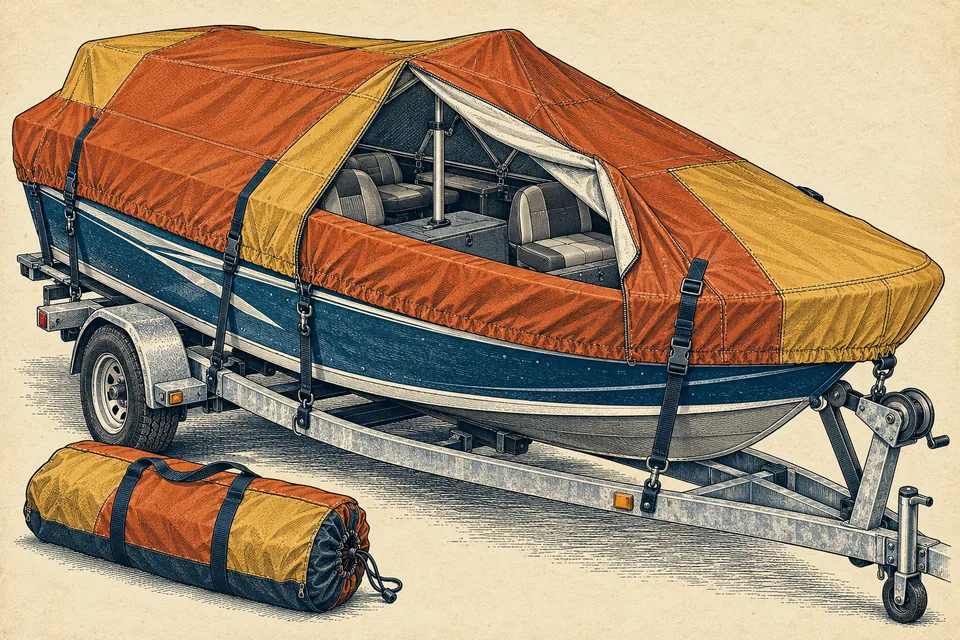
Measure the boat as the specific cover maker instructs; centerline length, beam and included projections determine fit.
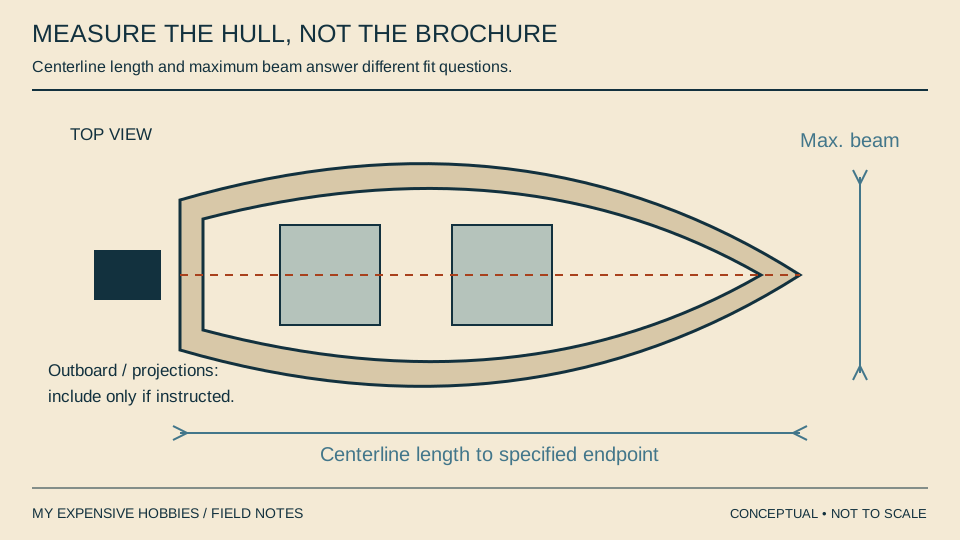
Measure the boat, not the brochure
BoatUS advises measuring the physical boat even when you know the manufacturer’s advertised length. If the cover must include a swim platform, bow pulpit or trolling motor, the required dimension may exceed the nominal hull length.
Measure centerline length as a straight horizontal distance according to the chosen cover’s instructions. Do not assume a curve across the deck is the same thing.
Maximum beam is not a guess
Measure the maximum width relevant to the cover’s fit. This might be different from the trailer width, rub rail shape or the dimension listed for a different model year. For rail-heavy pontoon layouts, note gates, rails and projections.
Provide measurements in the exact units and convention requested by the manufacturer.
Choose the job before choosing the fabric
A cover for dry storage under a roof, a mooring cover left in UV exposure, and a trailering cover that faces highway wind have different attachment and reinforcement needs. Check whether the particular cover is rated for trailering.
Think about ventilation, support poles, pooling water, tensioning and abrasion points. Even an expensive fabric can fail quickly if water puddles or a sharp corner rubs it on every windy day.
Fit-specific versus semi-custom
Fit-specific covers can be a cleaner solution when the manufacturer truly supports your model year and configuration. Semi-custom covers may work when the shape, beam, length and accessory arrangement match the product’s published range.
Before buying, locate the retailer’s exact return and fit policy. A generic label saying “fits 18–20 ft boats” is not the entire specification.
Keep a reusable measurement record
Photograph the boat from four sides, record centerline, beam, windshield/console height, towers, folded Bimini height, platform and motor projections. That record will help with the next cover, storage enclosure and shipping quote.
FREE WORKSHEET
Boat-cover fit worksheet
Create a copyable record of centerline, beam and accessory projections before you buy canvas.
Take this list shopping
- Actual centerline length measured to intended covered endpoint
- Maximum applicable beam measured
- All major projections and height changes photographed
- Mooring/storage/trailering use decided
- Seller’s fit definition and return policy checked
Sources and further reading
Links are to original manufacturer documentation, authoritative boating references, or primary resources. Specific product choices still require checking current instructions.
Research published 2026-10-08. Independent educational guidance; not a certified marine engineering, electrical, mechanical or safety inspection.