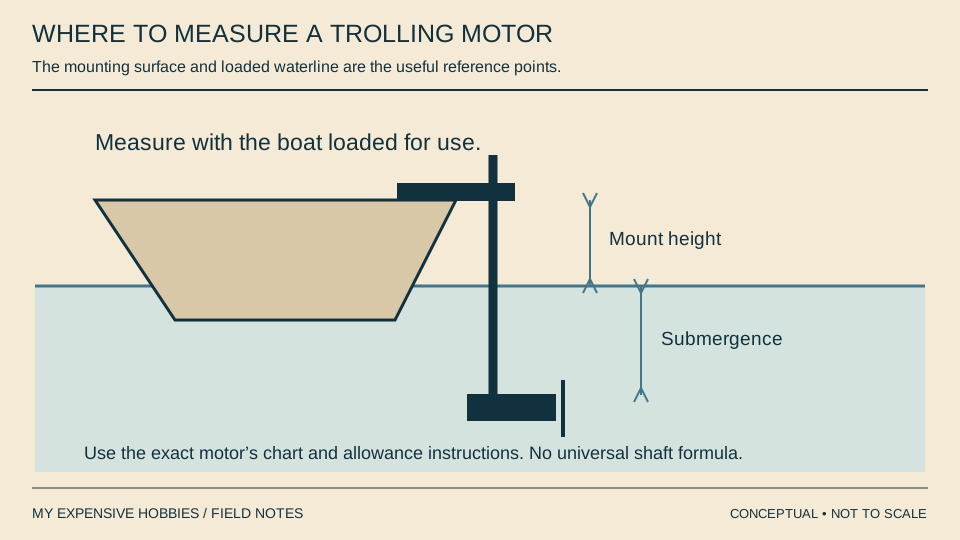
Measure from the actual motor mounting surface to the waterline with the boat loaded, then consult the specific manufacturer’s shaft-length chart.
Measure the actual mounting surface
On a bow mount, measure vertically from the motor’s intended mounting surface to the waterline when the boat is normally loaded. Do not substitute hull length or assume the marketing description tells you where the motor sits above the water.
Minn Kota recommends keeping the motor unit sufficiently submerged, and its published bow- and transom-mount shaft charts use that waterline measurement as the starting point.
Add margin for rougher conditions
Bow height changes when people move forward, fuel and gear move, or the hull pitches through chop. Minn Kota advises adding 5 inches to the measurement for fishing in rough water; hand-controlled bow mounts have additional handling considerations.
The margin you need depends on wave exposure, mounting geometry and the model’s instructions. A chart is better than a single universal number.
Thrust is not speed
Minn Kota recommends roughly 2 pounds of thrust per 100 pounds of fully loaded boat weight as a general minimum guide, with extra capacity in significant wind and current. A higher thrust rating does not automatically translate into higher top speed.
Use total loaded weight, not dry hull weight, and pay attention to voltage: many higher-thrust setups need 24 V or 36 V banks and compatible chargers, breakers and cable.
Check the bracket before committing
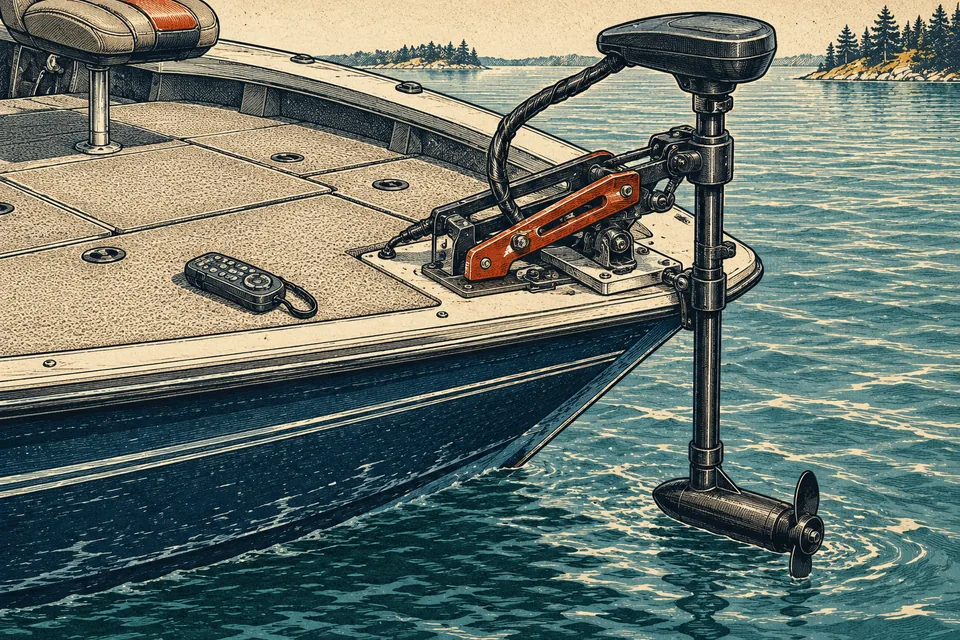
Will the shaft clear the rub rail, seating, bow lights and rails while deploying? Can the motor stow without colliding with a hatch or anchor roller? Measure the full deployment envelope, not just the vertical shaft.
Saltwater capability, GPS anchoring, wireless pedals and integrated transducers are additional compatibility decisions. Do the physical geometry first.
Use our estimator as a starting point
The tool below shows relevant standard lengths to consider. It does not replace the current model-specific guide. If you fall between published ranges, resolve that with the manufacturer rather than gambling on a shaft.
FREE WORKSHEET
Trolling shaft measurement helper
Record mounting-surface height and browse published Minn Kota bow-mount shaft-length ranges.
Take this list shopping
- Measured mounting surface to loaded waterline
- Checked model-specific shaft guide and rough-water allowance
- Compared thrust to loaded displacement and wind exposure
- Confirmed voltage, charger and protection system
- Mocked up deployed and stowed clearances
Sources and further reading
Links are to original manufacturer documentation, authoritative boating references, or primary resources. Specific product choices still require checking current instructions.
Research published 2026-10-08. Independent educational guidance; not a certified marine engineering, electrical, mechanical or safety inspection.