PLANNING TOOL · NO ACCOUNT REQUIRED
Onboard electrical load planner.
Add common onboard appliances to estimate daily watt-hours, peak watts and baseline battery capacity.
INTERACTIVE CALCULATOR
Adjust the inputs. Estimates update instantly; nothing is uploaded.
YOUR ESTIMATE
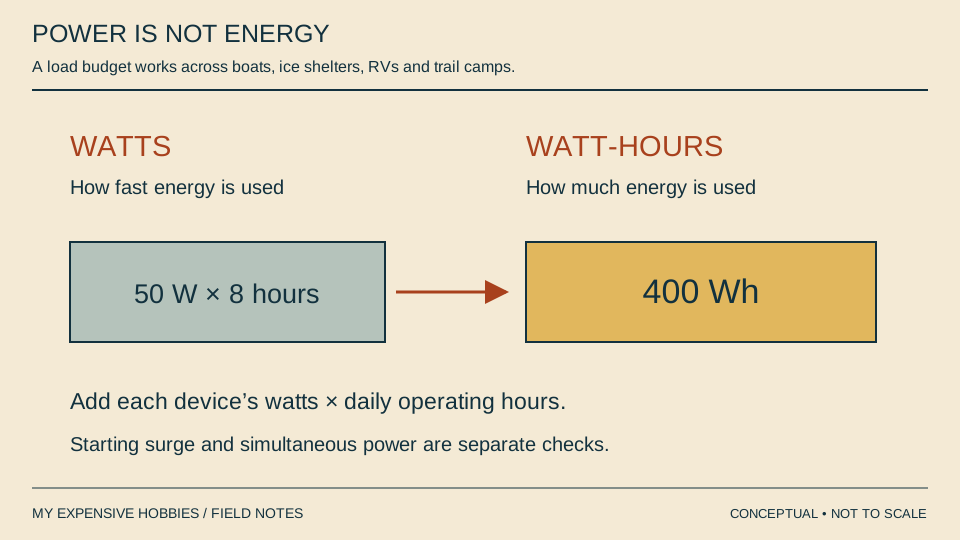
Daily energy = sum of (watts × hours). Simultaneous running watts are shown as a deliberately conservative sum of all entered running loads, not a measured demand profile.
This is not an inverter surge design. Motor startup currents, inverter losses, compressor duty cycle and power factor are not modeled; use manufacturer data for actual system sizing.
IF YOU WANT THE WHOLE STORY
The math is the beginning.
A quiet night at anchor, a microwave and a diesel generator are three different purchasing decisions masquerading as one.
Read the companion guidePUT THE RESULT TO WORK
Put a real liner in the power budget
Gerbing lists 77 watts for its 12V Jacket Liner 2.0. At 12 volts that is about 6.4 amps before adding any other equipment. That concrete load is more useful than describing the garment as low-power. Your vehicle still needs enough documented accessory and charging capacity for the complete setup.
Read the buying guide →